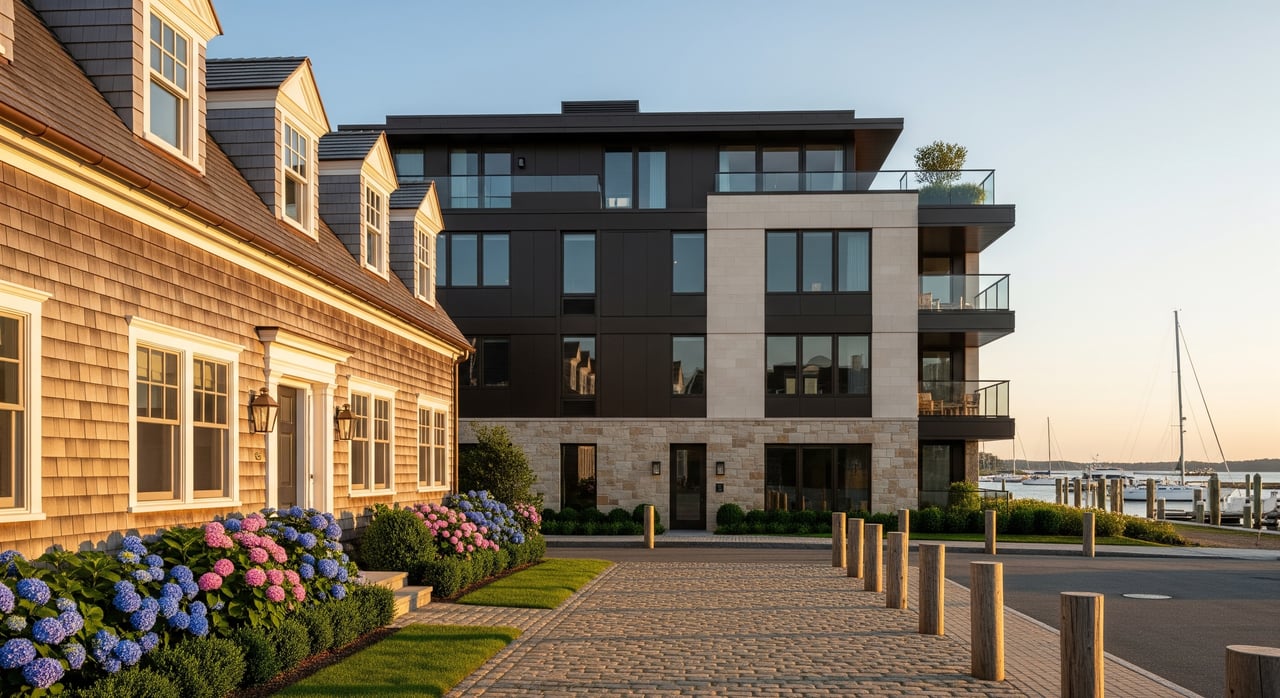
Thinking about a condo or a townhouse in Sag Harbor? You are not alone. Many NYC buyers and local residents weigh these options for a low-maintenance weekend place or a right-sized year-round home. You want clarity on ownership, fees, maintenance, and rules before you commit.
In this guide, you will learn how condos and townhouses in Sag Harbor differ, what they cost to carry, how financing works, and the local factors that should shape your choice. You will also get a simple checklist to use before you write an offer. Let’s dive in.
Quick definitions in Sag Harbor
What is a condo here?
A condominium is a legal structure where you own your individual unit and a shared interest in the common areas. You receive a deed and a separate tax bill for your unit. In Sag Harbor, condos can be in small multi-unit buildings, waterfront developments, or historic conversions near the village core.
Condo associations are governed by a declaration, bylaws, and an elected board. Monthly common charges fund shared services and reserves.
What is a townhouse here?
A townhouse in Sag Harbor commonly appears in two forms:
- Fee-simple townhouse: You own the structure and the land beneath it, similar to a single-family home. Some have an HOA for shared services, while others do not.
- Condo-form townhouse: It looks like a townhouse but is legally a condo inside a condominium project. The duties and rules follow condo documents.
Many attached homes marketed as townhouses are fee-simple in newer developments or infill areas. Always check the deed and governing documents to confirm.
Other ownership forms to know
You may also see co-ops in some East End communities. These differ from condos and use a different financing process. In the village core, mixed-use buildings can include residential condos with commercial components that affect rules and insurance.
Costs at a glance
Purchase price and position
Condos typically offer a lower entry price than fee-simple homes nearby because they share amenities and outdoor space. Fee-simple townhouses often command more due to private land, more square footage, and flexibility. Sag Harbor is a high-demand coastal market, so both types sit at premium price points relative to the broader county.
Monthly fees and assessments
- Condos: Common charges usually cover exterior upkeep, building insurance on common elements, landscaping, and reserves. Utilities such as water or gas can be included in some projects. Fees vary widely. Ask for an itemized budget.
- Townhouses: If fee-simple with no HOA, you may have little or no monthly fee beyond your own utilities and upkeep. If part of an HOA or a condo-form townhome, expect similar common charges to condos.
Special assessments can occur if reserves fall short for big projects like roofs, bulkheads, or structural work. Review the reserve fund and recent meeting minutes for upcoming costs.
Taxes and transfer costs
Fee-simple townhouse owners pay the full property tax bill for their parcel. Condo owners receive separate tax bills for their units. In New York State, transfer taxes apply to most sales. The state “mansion tax” begins at purchases of 1,000,000 dollars and above. Local transfer taxes and recording fees may also apply. Confirm current requirements before you budget closing costs.
Insurance basics
- Condos: The association carries a master policy for common elements and building structure to a defined extent. You purchase an HO-6 policy for your interior finishes, personal property, liability, and often loss assessment coverage.
- Fee-simple townhouses: You purchase an HO-3 or HO-5 policy covering the structure, contents, and liability. In flood-prone areas, lenders will require flood insurance if the property lies in a FEMA Special Flood Hazard Area. Premiums for flood and wind coverage can be higher on the coast and depend on elevation and mitigation features.
Financing differences
- Fee-simple townhouses: Lenders treat these like single-family homes with standard underwriting.
- Condos: Project-level reviews can affect financing. Some lenders require certain approvals or avoid small or problematic condo projects. FHA and VA loans have specific condo project approval requirements. If you plan to rent, know that some lenders restrict loans in condo buildings with certain rental rules.
Maintenance and lifestyle tradeoffs
Who handles upkeep
Condos usually take care of exterior maintenance, building systems, landscaping, and common areas. You maintain your interior. Fee-simple townhouses place more responsibility on you for exterior and systems unless an HOA covers specific items. Condos reduce on-the-ground chores. Townhouses offer more control and privacy with potentially higher occasional outlays.
Amenities and daily living
Condos often include amenities like landscaping, pools, shared waterfront access, docks, and sometimes on-site management. Many options are walkable to shops and restaurants, which is a big plus in the village. Townhouses can bring private yards, garages, or even private docks if waterfront, along with more separation from neighbors.
Privacy, storage, and renovation
Townhouses typically deliver more privacy, exterior storage, and ability to alter the exterior, subject to local rules. Condos tend to restrict exterior changes and require notice or approval for interior work that affects common elements or structure.
Rentals and use rules
Condo bylaws can limit rentals, short-term stays, or guest policies. Fee-simple owners typically have more flexibility but must still follow any HOA covenants and local law. In Sag Harbor and the Town of Southampton, short-term rentals are regulated through local rules, licensing, and occupancy limits. Always verify both HOA documents and local requirements if rental income matters to you.
Sag Harbor factors that matter
Flood risk and coastal hazards
Sag Harbor sits on the water with areas mapped in FEMA flood zones A, AE, and VE. Lenders often require flood insurance when a property lies in a Special Flood Hazard Area. Elevation, design on pilings, and past mitigation work influence premiums and insurability. Ask for elevation certificates and past flood history where applicable.
Historic district and design review
Parts of the village are subject to historic and design review. Exterior changes, additions, or demolitions can require approvals. This can limit what you can do with a fee-simple townhouse or a condo in a historic building. Verify local rules before planning exterior work.
Zoning, septic, and utilities
Properties outside the village core may use private septic systems and wells. Septic capacity, sewers, setbacks, lot coverage, and coastal regulations all influence expansion plans and outdoor improvements. Confirm these early if you want to add space, a pool, or hardscape.
Short-term rental overlay
Village and Town rules set terms for short-term rentals, including registration and occupancy. These requirements sit on top of any condo or HOA rules. If you want rental income, confirm what is allowed, for how long, and any taxes or permits required.
Resale dynamics
Walkable, low-maintenance condos in or near the village often attract downsizers and second-home buyers. Fee-simple townhouses compete with smaller single-family homes, appealing to those who want more privacy and outdoor space. In a low-supply market, your choice should consider typical buyer pools and the property’s long-term appeal.
Condo vs townhouse: a quick comparison
| Feature | Condo | Fee-simple Townhouse |
|---|---|---|
| Ownership and title | Unit plus shared interest in common elements | Structure and the land beneath it |
| Monthly fees | Common charges for exterior, insurance on common areas, reserves | Often lower or none unless an HOA exists |
| Exterior maintenance | HOA typically handles | Owner responsibility unless HOA covers items |
| Insurance | HO-6 plus potential loss assessment | HO-3 or HO-5 plus flood if required |
| Financing | Project-level reviews can apply | Standard single-family underwriting |
| Outdoor space | Limited, shared, or managed by HOA | Private yard or terrace more common |
| Amenities | Often pools, docks, landscaping, on-site management | Varies; private garages or docks more common |
| Rental rules | Bylaws often set minimum lease terms and limits | Usually more flexible, subject to local rules |
| Renovation flexibility | Interior work often requires notice or approval | More flexibility, subject to zoning and historic rules |
| Flood considerations | Building-wide flood risk and master policy context | Property-specific elevation and mitigation |
| Best fit | Low-maintenance lifestyle near village | More privacy and control with added upkeep |
What to check before you choose
If you are buying a condo
- Declaration, bylaws, house rules, and any amendments
- Current budget, year-end financials, and reserve study
- HOA meeting minutes for the last 12 to 24 months
- Master insurance policy and certificate of insurance
- Owner-occupancy mix, rental policy, and any litigation disclosures
- Pending or planned special assessments and project timelines
- Standard condo questionnaire and any FHA or VA approvals
If you are buying a fee-simple townhouse
- Recent property tax bill and assessment history
- Deed and survey showing boundaries and easements
- HOA covenants and rules if an association exists
- Septic location and inspection records, well reports if applicable
- Any flood, bulkhead, or coastal mitigation permits and records
Inspections and third-party reports
- Comprehensive home inspection
- Elevation certificate and flood-risk assessment if in a flood zone
- Septic inspection and capacity evaluation
- Termite and wood-boring insect inspection
- Survey and boundary confirmation
Key questions to answer
- Who owns the land, roof, and structure, and who maintains them?
- What exactly do monthly fees cover, including utilities and reserves?
- Is there litigation, a history of special assessments, or large projects ahead?
- Are there rental restrictions or local registration rules that affect income?
- Will you need flood insurance, and what are today’s premiums for this location?
- How will financing work for this property type and project?
- If historic rules apply, what exterior changes are allowed?
Which is right for you?
Choose a condo if you want a lock-and-leave, lower-maintenance lifestyle close to shops and restaurants. The shared services and amenities can free up your weekends.
Choose a fee-simple townhouse if you value privacy, outdoor space, and the flexibility to customize. You will take on more maintenance, but you gain control and long-term options.
If rental income is important, confirm both HOA rules and local short-term rental requirements. For coastal properties, weigh flood risk, elevation, and insurance carefully.
Next steps
Every property and building is different. The right choice balances location, carrying costs, maintenance, and your long-term plans. If you want a local, concierge-style advisor to help you compare specific Sag Harbor options, connect with Rachael L. York to walk through documents, risks, and next steps.
FAQs
Which is lower maintenance in Sag Harbor, a condo or a townhouse?
- Condos usually require less hands-on upkeep because the association handles exterior maintenance and common areas, while fee-simple townhouses place more responsibility on you.
How do HOA fees compare to owning a fee-simple townhouse in Sag Harbor?
- Condo common charges can be higher since they include exterior upkeep, insurance on common elements, and reserves; fee-simple townhouses may have lower or no monthly fees unless an HOA exists.
What financing differences should Sag Harbor buyers expect for condos vs townhouses?
- Fee-simple townhouses follow standard single-family underwriting; condos can involve project-level reviews and approvals that may limit lender options or timing.
How do flood zones affect condo and townhouse ownership in Sag Harbor?
- Lenders typically require flood insurance for properties in FEMA Special Flood Hazard Areas; elevation, building design, and mitigation features drive premiums for both property types.
What short-term rental rules apply to condos vs townhouses in Sag Harbor?
- Condos may restrict rentals through bylaws, and both condos and townhouses must follow local village and town registration and occupancy rules for short-term rentals.
For NYC buyers seeking a weekend place in Sag Harbor, is a condo or townhouse better?
- Condos fit a lock-and-leave, low-maintenance weekend lifestyle near the village; townhouses suit buyers who want more privacy and outdoor space and are comfortable with added upkeep.